People often look for a "fast first aid course" or "express cpr course" at the exact minute life is already active and difficult. A brand-new work is beginning, a child care function requires immediate compliance, or a sports club requires a person certified before the weekend break. On paper, fast certification sounds best. In practice, it can be either a wise, reliable option or a dangerous shortcut.
I have instructed first aid and cpr courses to parents, tradies, child care educators, registered nurses, and office staff for years. I have actually also enjoyed what occurs months later, when something really fails and someone falls down in a play area or on a. That is when you see really clearly which type of training leaves people tranquil and competent, and which kind leaves them standing frozen, certificate in hand yet no actual idea what to do.
This post unloads the reality behind "fast first aid" and "express first aid training" so you can obtain the effectiveness you need without sacrificing the skills you are depending on.
Why many individuals chase after fast certification
Most people are not attempting to reduce corners on safety. They are attempting to fit necessary training right into their lives. The inspirations I hear are generally very reasonable.
A new childcare worker requires an express child care first aid course due to the fact that the service can not roster them without a legitimate first aid certificate. A building and construction manager desires a fast first aid training session so the site stays compliant when the current very first aider takes place leave. A parent signs up for an express cpr course after a scare with a choking kid, figured out but additionally juggling shift work and family.
Time stress https://jeffreykzqv064.trexgame.net/fast-first-aid-cpr-classes-comprehending-course-levels is real. Employers typically establish limited target dates. Specialist enrollments need proof of existing first aid and cpr training classes before renewal. Include traveling time to a training venue and losing a complete day's pay, and the appeal of fast cpr courses or an on the internet express first aid course is obvious.
Speed, by itself, is not the adversary. The trouble is when "fast" becomes the primary marketing point, and actual competence becomes an afterthought.
What "fast" generally indicates in first aid and CPR courses
When you see marketing terms like fast first aid course, express cpr training, or one‑hour first aid and cpr course, they can indicate several various things:
The concept component is relocated online. The course presumes anticipation and is structured as a real refresher. Content is greatly trimmed. Assessment is superficial.The initially 2 can function well. The last 2 are where problem starts.
Blended learning is the most reliable version of fast certification. Individuals full online first aid training components or cpr training concept ahead of time, then attend a much shorter in‑person session concentrated on abilities practice, situations, and analysis. When done properly, this can reduce class time virtually in half without lowering learning high quality. For hectic individuals or employers attempting to arrange team, this is really helpful.
On the various other hand, I have actually reviewed "express first aid courses" where the on-line web content was a handful of slides and a 10‑question quiz, adhered to by a very short useful session with marginal feedback. The certificate looked the same to those from extensive first aid courses, yet the ability degree was not also close.
"Fast" is not a standardised term. One provider's fast cpr correspondence course might be an efficient modification session for already proficient personnel. An additional's fast cpr course may be absolutely nothing greater than a demonstration that you see, without hands‑on work at all. You need to look past the word and analyze what is in fact delivered.
Myth vs fact: usual beliefs regarding fast first aid courses
Misconceptions regarding express first aid training appear in every course I educate. A few of them are safe. Some threaten. It helps to tackle them head on.
Here is a compact comparison of some myths and the truth behind them.
Myth: "If the course is recognized, the speed does not issue."
Truth: Certification sets minimum results, not exactly how extensively they are educated or exercised. Two approved first aid and cpr courses can really feel completely various extensive and intensity.
Myth: "I can find out first aid from videos equally as well as in person."
Truth: Videos are excellent introductions. They are inadequate replacement for a person fixing your hand setting on the breast of a manikin or coaching you with the panic of a simulated emergency.
Myth: "Fast first aid courses are just for people who already know what they are doing."
Truth: Some are genuine correspondence course, but others are marketed to novices for comfort. New learners in an extremely compressed class have a tendency to keep in mind fragments, not a meaningful response.
Myth: "Once I have the first aid certificate, I am established for several years."
Truth: Abilities fade. When I run cpr training for people two or three years after their last course, numerous can not remember compression deepness or the proportion of compressions to breaths until we exercise again.
Myth: "Less hours implies the fitness instructor is extra reliable and seasoned."
Truth: There is a distinction between cutting out fluff and removing technique. Performance needs to come from emphasis, not by missing important drills.
Whenever you see fast first aid, fast cpr, or express cpr courses advertised, ask which of these myths the marketing is depending on. That straightforward psychological check currently places you ahead of several buyers.
How long top quality first aid and CPR training in fact takes
People frequently ask me, "The number of hours do I actually need?" They listen to tales of somebody doing first aid and cpr training in under 2 hours and question if a full‑day first aid course is unnecessary.
The truthful solution is that the moment required depends on 3 points: your prior experience, the course range, and just how sensible you desire the training to be.
For someone without much background, an extensive first aid and cpr course that covers fundamental life support, common clinical emergency situations, wounds, fractures, burns, and scenario practice usually runs around 6 to eight hours in the classroom, or a blended format with a number of hours of online job plus three to 4 hours one-on-one. That is about the minimum to relocate from "I enjoyed a video when" to "I can actually execute cpr and handle a severe bleed under stress."
For cpr courses alone, a focused session, after some pre‑reading or e‑learning, can be completed in 90 to 120 mins. Anything much shorter than that starts to really feel hurried, especially for people who have never ever done upper body compressions on a manikin.

Childcare certain training, such as an express child care first aid course, has extra content like paediatric cpr, anaphylaxis, asthma administration, and certain regulatory needs. Also the express variations require sufficient time to overcome situations involving babies and youngsters. Anticipate these to take longer than a fundamental workplace course.
If a company asserts they can fully educate total beginners in first aid and cpr in an hour, without pre‑course work, that ought to question. Literally exercising skills and allowing them work out in your memory requires time. There is just so much you can compress prior to top quality drops.
What can safely be compressed, and what cannot
Not every min in a conventional eight‑hour course is sacred. Good fitness instructors understand where they can improve without shedding value.
Theory distribution is the simplest part to compress. Fundamental understanding concerning the chain of survival, acknowledging a stroke, or recognizing how an automated outside defibrillator works can be discovered by means of interactive online modules, brief analyses, or videos prior to the face‑to‑face part. When individuals arrive already knowledgeable about vital concepts, the course can invest even more time on technique and much less on lectures.
Administrative tasks can likewise be cut. Reliable sign‑in, pre‑filled forms, and on the internet assessments minimize lost time. A well‑organised express first aid course often really feels tighter simply since the https://rentry.co/9csq3imo logistics are under control.
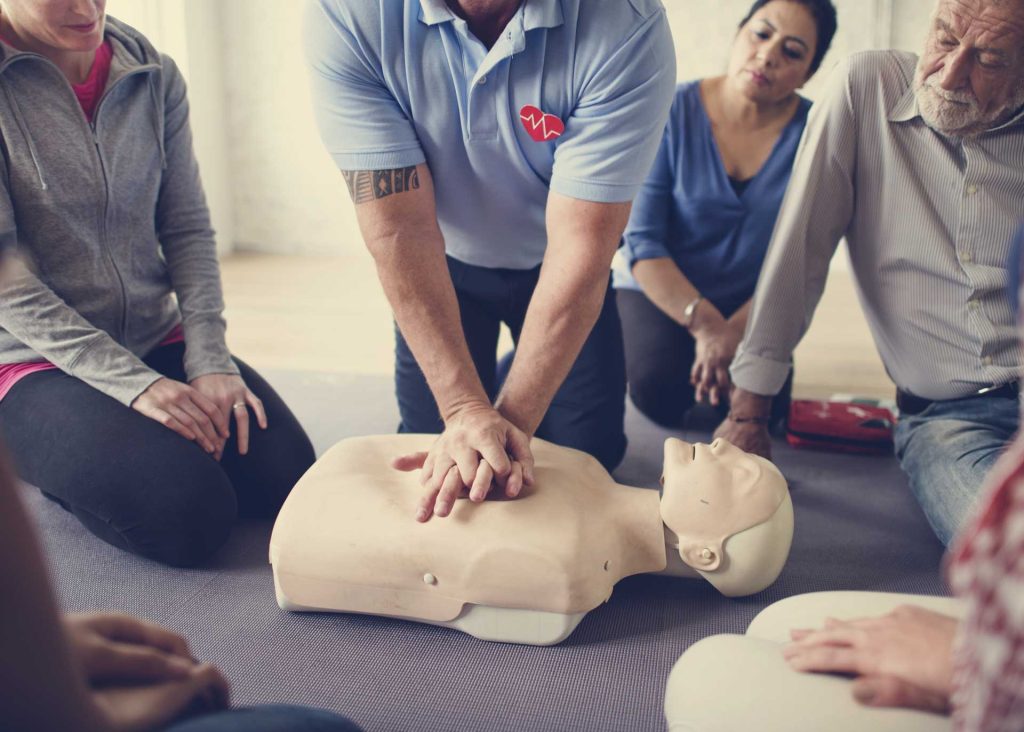
What can not be securely pressed is significant method. Ability acquisition in first aid and cpr training depends on rep under small variations. You require to carry out chest compressions long enough to feel your arms tire. You need to roll numerous different volunteers into the healing placement, not simply one. You need to practice making use of an epinephrine auto‑injector instructor, not only view it demonstrated.
Scenario based learning likewise withstands compression. When we run first aid and cpr training classes with method situations - a co‑worker with upper body discomfort, an unconscious child near a playground, a chemical sprinkle in an eye - individuals repeatedly state those were what "locked in" their knowing. These scenarios take some time, yet they are where expertise becomes judgment.
If a fast first aid course or fast cpr course intends to be genuinely "fast" without being superficial, it ought to cut repeating of easy theory and management fluff, not the hands‑on components.
Spotting red flags in "express" and "fast" courses
The advertising language for express first aid courses or fast certification can conceal inadequate training behind glossy guarantees. Certain patterns repeat commonly sufficient that they are worth watching for.
When all emphasis gets on speed and price, with virtually no information regarding web content, duration, or assessment, that is a warning sign. Trustworthy service providers explain what you will cover, for how long the session will run, and what is expected of you before and throughout the course.
A 2nd red flag is a heavy dependence on "no‑fail" warranties. Competent trainers will sustain you to get to the required standard, however they need to likewise be clear that you must show abilities. If a site flaunts that everyone passes whenever, yet states almost absolutely nothing regarding actual assessment, ask exactly how they are defining "pass."
Another problem is large team dimensions, specifically simply put courses. In a space of 30 or more people with one fitness instructor and a handful of manikins, each participant may only get a couple of minutes of real cpr practice. On paper you went to cpr training. In reality you saw others practice.
Pay focus as well to whether the company discuss customizing for your market. Quality express child care first aid training, for example, addresses actual child care situations, not generic work environment injuries. An express cpr course for a workplace may concentrate on adult heart emergency situations, while a sporting activities club might need a lot more around trauma and spinal management. Cookie‑cutter "one size fits all" courses attempt to be whatever to every person and commonly end up thin everywhere.
How to select a fast first aid course near you
If you kind "fast first aid course near me" right into an online search engine, you will obtain a congested web page of options, from national brand names to one‑person outfits. Rather than being persuaded by whichever ad yells the loudest concerning rate, resolve a short checklist.
Here is a straightforward method to compare express first aid or fast cpr courses side-by-side:
Check certification and recognition.

Look at course structure.
Like blended options where concept is done online and class time is reserved for practice. Watch out for courses that are completely on-line for first aid and cpr, without any in‑person skills assessment.
Ask about duration and group size.
Authentic fast first aid training still needs a number of hours for technique, particularly if groups are big. Shorter sessions need to either target cpr refresher needs or be extremely tiny groups.
Read reviews for talk about technique, not simply convenience.
Evaluations that claim "fast and simple" without discussing hands‑on discovering are much less calming than evaluations defining sensible scenarios and practical feedback.
Clarify what you have to do prior to the course.
Quality express first aid courses generally require pre‑course analysis or e‑learning. If you can just stroll in cool for a one‑hour class that assures full first aid and cpr certification, the faster ways are most likely significant.
Taking 10 minutes to ask these inquiries can be the distinction between a certificate that satisfies a spread sheet and abilities that actually help when a person is not breathing.
When fast CPR refresher courses make sense
There is a place for fast cpr refresher course layouts. When somebody has developed strong foundation skills, shorter, focused refresher courses can be really effective.
In workplaces where staff perform normal drills or manage clinical concerns frequently, abilities decline much less between formal courses. For these groups, an annual fast cpr course of around an hour, snugly concentrated on updates and technique, often works well, especially when paired with casual simulations during the year.
Similarly, medical care employees or very first responders that utilize these abilities at work might not require complete revisits of every first aid topic. A concentrated cpr training session highlighting newest guideline modifications and letting them refine technique can be time‑efficient and relevant.
The difficulty comes when fast correspondence course are made use of as a replacement for initial training. People who missed crucial principles the very first time are unlikely to capture up in a compressed refresher. Companies in some cases publication "refresher" sessions for personnel who never ever had correct first aid training in the first place, presuming a brief course is all that is required to produce experienced first aiders. It is not.
If you are selecting a refresher alternative, be honest about your skill level. If you can not with confidence speak via the actions of cpr and fundamental first aid without notes, it might be far better to duplicate a more detailed mixed course as opposed to count on the fastest option.
Special factors to consider for childcare and paediatric initial aid
Childcare settings are a grandfather clause, and express childcare first aid courses have actually ended up being popular. Educators are generally managing shift job, regulative deadlines, and https://privatebin.net/?a4e92b1bc74d1812#CpCRthDD8YKivRxL9TR7b8rv2iPEDA7EsvxpNfwV6kSc the extremely actual requirements of kids with complicated clinical conditions.
Paediatric emergencies additionally look various from grown-up ones. Baby cpr requires different hand positioning and deepness. Childhood years diseases present with various indication. Choking in toddlers prevails and commonly happens unexpectedly throughout routine play.
For express childcare first aid training to be safe and effective, it must purposely resolve these differences. That implies more than simply adding the word "childcare" to a common first aid course. Fitness instructors ought to fit talking about bronchial asthma action strategies, anaphylaxis management, seizure safety, head injuries on play grounds, and the emotional management of an event in front of various other children.
In my experience, the very best express child care first aid courses make use of practical role‑plays: a child that will not wake from snooze time, a youngster with a recognized allergic reaction who begins to wheeze at lunch, or a child discovered face down in a cot. Educators technique not simply the technical treatments but interaction with colleagues, moms and dads, and emergency situation services.
If you work in childcare and are contrasting express childcare first aid courses, look very closely at exactly how they define paediatric material. Ask how much time is invested in baby and kid scenarios about grown-up ones. Fast is practical, however only if the content really matches your day-to-day reality.
Online just courses: where they assist and where they fall short
Purely on-line first aid course options prevail now. They have a place, provided expectations are clear.
For theoretical understanding or low‑risk atmospheres, on the internet modules can introduce principles well. Somebody taking care of a little remote team could make use of an online first aid course as a starting point, then strategy later in‑person practice when possible. Parents typically finish an on-line cpr training session before going to a functional course, so they arrive currently familiar with terminology and basic steps.
However, for any type of function that needs hands‑on responses - from childcare team to office first aid officers - evaluation of useful skills stays crucial. Regulatory authorities in lots of areas explicitly call for shown capability face to face for first aid and cpr certificates to be totally valid.
Online video clips can not tell if your compressions are deep enough. They can not remedy your hand placement. They can not mimic the sound, confusion, and adrenaline of a real case. That is why mixed styles, where a fast certification option still consists of time with an instructor and manikins, often tend to supply the best of both worlds.
If a service provider uses full first aid and cpr certification totally on-line without need for in‑person analysis, check very thoroughly whether such a certificate actually satisfies your lawful or expert obligations.
A realistic means to think about "fast"
The healthiest method to approach fast first aid courses and express cpr training is to see them as devices to remove waste, not to remove learning.
Strip out unnecessary traveling by choosing a neighborhood "fast first aid course near me" with good reviews. Strip out redundant lectures by finishing high‑quality online modules beforehand. Strip out long lunch breaks and poor time monitoring by selecting a reliable provider.
What you should maintain is time on the floor with manikins, time practicing circumstances, and time asking questions. Maintain straightforward evaluation that provides you responses. Keep a mindset that this is not a tick‑the‑box occasion, however an investment in abilities you hope you never ever need however can not pay for to fumble if you do.
I have actually seen graduates of both sluggish, traditional first aid training and well‑designed fast first aid courses respond to genuine emergencies. The usual consider those who perform well is not the number of hours they sat in a class, but just how proactively they involved and just how much purposeful technique they had.
If you seek out carriers that value that distinction, you can reap the benefits of fast certification without falling for the myths that turn speed into a liability.